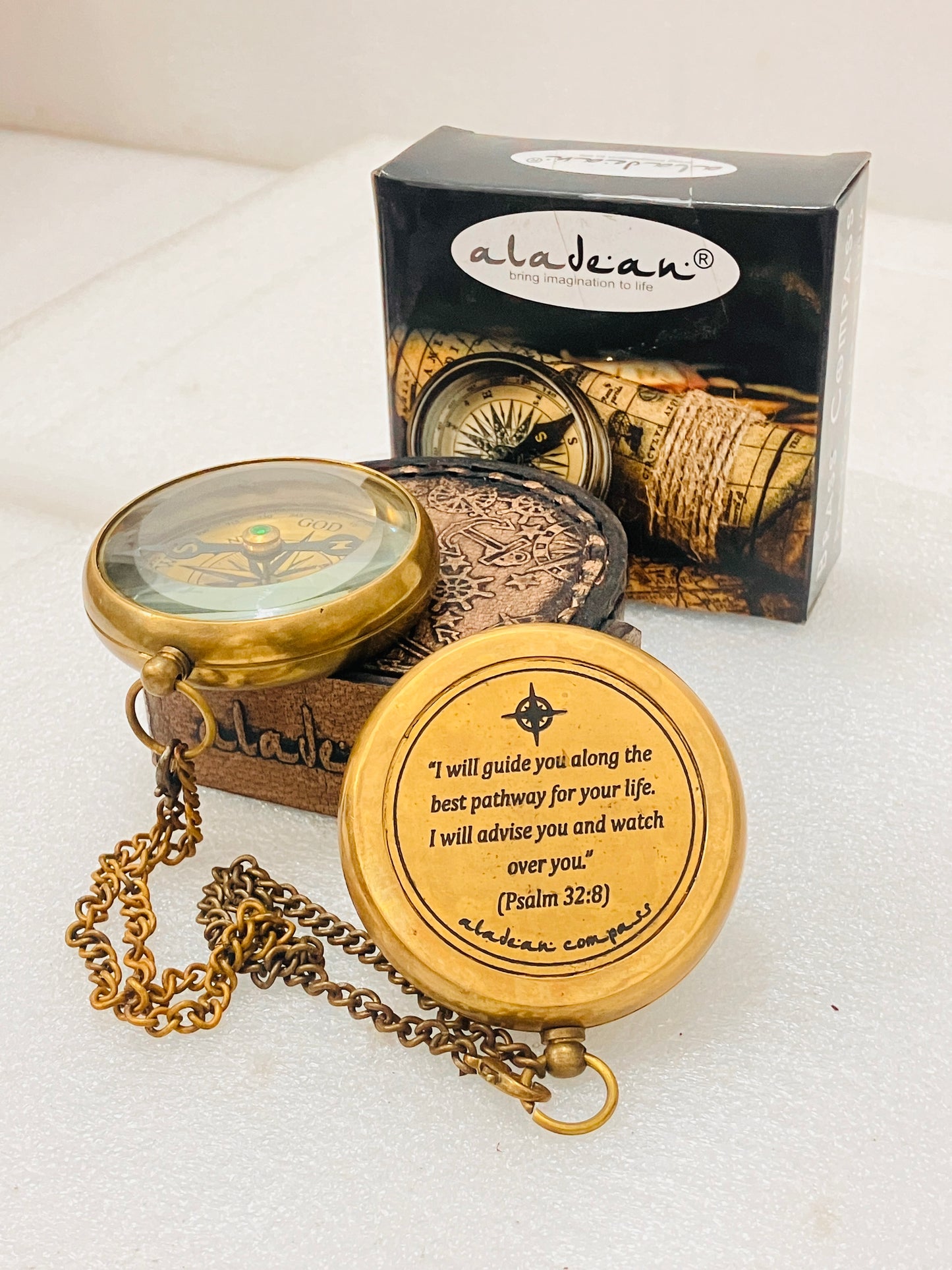

Ich werde dich auf den besten Weg leiten — Der vollständige Leitfaden zu Psalm 32,8: Bedeutung, Kontext, jede Version, jede Sprache & warum er zum persönlichsten Geschenk wird

Das Versprechen nach dem Fall
Es gibt einen Vers in der Bibel, den die meisten Menschen kennen – doch nur wenige kennen die Geschichte, die dahintersteht.
"Ich will dich unterweisen und dir den Weg zeigen, den du gehen sollst; ich will dich mit meinen Augen leiten."
— Psalm 32,8 (Lutherbibel)
Es klingt wie ein Vers für die Sieger. Für den Menschen, der am Anfang von etwas Wunderbarem steht, voller Hoffnung und Möglichkeiten. Und das ist er auch – aber er ist noch so viel mehr.
Denn Psalm 32 wurde nicht von einem Mann auf dem Höhepunkt seines Erfolgs geschrieben. Er wurde von einem Mann geschrieben, der gerade das katastrophalste moralische Versagen seines Lebens erlebt hatte. David – der König, der Krieger, der Mann nach dem Herzen Gottes – hatte Ehebruch mit Batseba begangen, den Mord an ihrem Ehemann Uria eingefädelt und Monate damit verbracht, im Schweigen ungestandener Sünde zu leben. Der Psalm beginnt nicht mit Triumph, sondern mit der körperlichen Beschreibung dessen, was ungestandene Schuld mit einem menschlichen Körper macht: "Denn als ich es verschwieg, verfielen meine Gebeine durch mein tägliches Klagen."
Und dann – nach dem Bekenntnis, nach der Vergebung, nach der außergewöhnlichen Gnade eines Gottes, der selbst die gebrochensten Seiner Diener nicht aufgibt – kommt das Versprechen:
Ich will dich unterweisen und dir den Weg zeigen, den du gehen sollst.
Dies ist kein Vers für Menschen, die noch nie versagt haben. Es ist ein Vers für Menschen, die es getan haben – und die entdeckt haben, dass Gottes Führung nicht dort endet, wo menschliches Versagen beginnt. Es ist das Versprechen, dass es einen Weg nach vorne gibt, selbst nachdem das Schlimmste passiert ist. Dass der beste Weg immer noch offensteht. Dass Gottes Blick immer noch auf dir ruht – voller Liebe, nicht voller Verurteilung.
Dies ist der vollständige Leitfaden zu Psalm 32,8 – einem der persönlichsten, tröstlichsten und hoffnungsvollsten Verse der gesamten Heiligen Schrift.
Entdecken Sie: Religiöse Geschenke – Handgefertigt & graviert von Aladean

Teil 1: Der Psalm – Wer David war, als er ihn schrieb
Um Psalm 32,8 zu verstehen, muss man Psalm 32 als Ganzes verstehen – denn das Versprechen der Führung steht nicht allein. Es ist der Höhepunkt einer Reise von der Schuld zur Gnade, vom Schweigen zum Bekenntnis, von der Zerbrochenheit zur Wiederherstellung.
Psalm 32 ist einer der sieben Bußpsalmen – die Psalmen des Bekenntnisses und der Umkehr, die in jedem Jahrhundert von Gläubigen gebetet wurden. Es ist auch einer der Psalmen, die der Apostel Paulus in Römer 4 zitiert, wenn er sein Argument für die Rechtfertigung aus Glauben vorbringt – und damit Davids Erfahrung der Vergebung direkt mit dem Evangelium der Gnade verbindet.
Der Psalm bewegt sich durch vier klare Abschnitte:
Abschnitt 1 – Der Segen der Vergebung (Verse 1-2):
"Wohl dem, dem die Übertretungen vergeben sind, dem die Sünde bedeckt ist! Wohl dem Menschen, dem der Herr die Schuld nicht anrechnet."
David beginnt nicht mit seiner Sünde, sondern mit dem Segen, der der Vergebung folgt. Er hat das Tal bereits durchschritten. Er schreibt von der anderen Seite aus. Und das Erste, was er sagen möchte, ist: Der vergebene Mensch ist gesegnet. Nicht der perfekte Mensch. Der, dem vergeben wurde.
Abschnitt 2 – Der Preis des Schweigens (Verse 3-4):
"Denn als ich es verschwieg, verfielen meine Gebeine durch mein tägliches Klagen. Denn deine Hand war schwer auf mir Tag und Nacht, dass mein Saft vertrocknete, wie es im Sommer trocken wird."
David beschreibt mit schmerzhafter Ehrlichkeit, was ungestandene Sünde mit einem Menschen macht. Es ist nicht nur geistlich – es ist körperlich. Die Last der Schuld ist ein echtes Gewicht. Das Schweigen der ungestandenen Sünde ist eine echte Stille. Und Gottes Hand, die auf ihm lastete, war keine Bestrafung – es war der Druck der Liebe, die sich weigerte, ihn an einem Ort bleiben zu lassen, der ihn zerstörte.
Abschnitt 3 – Die Erleichterung durch das Bekenntnis (Vers 5):
"Da bekannte ich dir meine Sünde und verbarg meine Schuld nicht. Ich sprach: Ich will dem Herrn meine Übertretungen bekennen. Da vergabst du mir die Schuld meiner Sünde."
Der Wendepunkt. Der Moment des Bekenntnisses – und die unmittelbare, vollständige Antwort der Vergebung. Keine teilweise Vergebung. Keine bedingte Vergebung. Die Schuld seiner Sünde wurde vergeben. Vergangenheitsform. Erledigt.
Abschnitt 4 – Das Versprechen der Führung (Verse 6-11):
Hier lebt Psalm 32,8 – in der Zeit nach der Vergebung, in dem Raum, der sich öffnet, wenn die Schuld beseitigt ist und der Weg nach vorne wieder sichtbar wird. Gott spricht direkt: Ich will dich unterweisen. Ich will dich beraten. Ich will über dich wachen. Das Versprechen der Führung ist untrennbar mit der Erfahrung der Vergebung verbunden. Man kann die Führung nicht vollständig empfangen, bevor man die Gnade empfangen hat.

Teil 2: Der vollständige Vers – Drei Versprechen in einem
Psalm 32,8 enthält nicht nur ein Versprechen, sondern drei – und jedes davon ist für sich genommen außergewöhnlich.
"Ich will dich unterweisen und dir den Weg zeigen, den du gehen sollst; ich will dich mit meinen Augen leiten."
— Psalm 32,8 (Lutherbibel)
Versprechen 1: "Ich will dich unterweisen und dir den Weg zeigen"
Das erste Versprechen gilt der aktiven, fortlaufenden Unterweisung. Gott ist kein passiver Beobachter deines Lebens. Er ist ein Lehrer – engagiert, zielgerichtet und daran interessiert, dass du verstehst. Das hebräische Wort für "unterweisen" ist hier sakal – Einsicht geben, weise machen, zum Verstehen bringen. Dies ist nicht die Anweisung einer distanzierten Autorität, die Befehle erteilt. Es ist die Anleitung eines Lehrers, der möchte, dass du verstehst, nicht nur, dass du gehorchst.
Versprechen 2: "Den Weg, den du gehen sollst"
Das zweite Versprechen gilt der Richtung – eine spezifische, persönliche Ausrichtung. Kein allgemeines Prinzip, sondern ein konkreter Weg. Das hebräische Wort derek bedeutet eine Straße, einen Pfad, eine Lebensweise – die gesamte Flugbahn der Lebensreise eines Menschen. Gott verspricht, nicht nur bei einzelnen Entscheidungen zu führen, sondern die gesamte Richtung eines Lebens. Den Weg, den du gehen sollst – den besten Pfad, die richtige Straße, den Weg, der dorthin führt, wofür du geschaffen wurdest.
Versprechen 3: "Ich will dich mit meinen Augen leiten"
Dies ist das intimste Versprechen in diesem Vers – und vielleicht in der gesamten Heiligen Schrift. Gottes Augen ruhen auf dir. Nicht die Augen eines Richters, der nach Verstößen sucht. Nicht die Augen eines distanzierten Beobachters. Die Augen der Liebe – dasselbe Wort, das in den Psalmen für Gottes beständige Bundestreue verwendet wird. Ayin – das Auge. Chesed – die liebende Güte. Gott beobachtet dich mit Liebe. Sein Rat kommt nicht nur aus einer Position der Autorität, sondern aus einer Position tiefer, persönlicher, bundesmäßiger Liebe.
Zusammen bilden diese drei Versprechen das vollständigste Bild göttlicher Führung in der Heiligen Schrift: Gott unterweist (Er lehrt dich), Gott lenkt (Er zeigt dir den Weg) und Gott behütet (Er hält seine liebevollen Augen auf dir). Du navigierst nicht allein. Du navigierst mit einem Lehrer, einem Wegweiser und einem liebevollen Wächter – alle drei, jederzeit, den ganzen Weg.

Teil 3: Das hebräische Original – Was "leiten", "Weg" und "Auge" wirklich bedeuten
Die deutsche Übersetzung von Psalm 32,8 ist wunderschön. Aber das hebräische Original ist außergewöhnlich – und das Verständnis der Schlüsselwörter verändert die Art und Weise, wie man den Vers liest.
יָרָה (Yarah) – "Ich will unterweisen / leiten"
Das hebräische Wort, das in den meisten Versionen als "unterweisen" übersetzt wird, ist יָרָה (yarah) – eines der bedeutendsten Wörter in der gesamten hebräischen Bibel.
Yarah hat eine physische Wurzelbedeutung: werfen, schießen, zeigen. Es ist dieselbe Wurzel, von der das Wort Tora kommt – das Gesetz, die Lehre, die Unterweisung Gottes. Wenn Gott sagt "Ich will dich yarah", sagt Er: Ich werde dir die Richtung weisen. Ich werde dich in die richtige Richtung lenken. Ich werde meine Anweisung wie einen Pfeil auf sein Ziel auf dich richten.
Dies ist keine passive Führung. Es ist eine aktive, richtungsweisende, zielgerichtete Unterweisung. Der Lehrer, der yarahs, wartet nicht darauf, dass der Schüler es selbst herausfindet. Er zeigt. Er zielt. Er lenkt mit Absicht und Präzision.
Die Verbindung zur Tora ist tiefgründig: Derselbe Gott, der Israel die Tora gab – die umfassende Anweisung, wie man leben soll –, ist der Gott, der verspricht, jeden Einzelnen persönlich auf dem Weg zu unterweisen, den er gehen soll. Die Führung ist nicht unpersönlich. Sie ist so persönlich wie die Beziehung zwischen einem Lehrer und einem Schüler, zwischen einem Elternteil und einem Kind.
דֶּרֶךְ (Derek) – "Der Weg / Der Pfad"
Das hebräische Wort für "Weg" oder "Pfad" ist דֶּרֶךְ (derek) – eines der häufigsten und wichtigsten Wörter in der hebräischen Bibel, das über 700 Mal vorkommt.
Derek bedeutet nicht nur eine physische Straße. Es bedeutet eine Lebensweise – die gesamte Flugbahn der Lebensreise eines Menschen, das Muster seiner Entscheidungen, die Richtung seiner Existenz. Wenn die Psalmen vom "Weg der Gerechten" und dem "Weg der Gottlosen" sprechen, verwenden sie derek – sie beschreiben nicht zwei verschiedene Straßen, sondern zwei verschiedene Arten, Mensch zu sein.
Wenn Gott verspricht, dich auf dem derek zu leiten, den du gehen sollst, verspricht Er etwas, das weit über Hilfe bei einzelnen Entscheidungen hinausgeht. Er verspricht, die gesamte Richtung deines Lebens zu lenken – das Muster, die Flugbahn, die Art zu sein, die zu dem Ziel führt, für das du geschaffen wurdest.
עַיִן (Ayin) – "Das Auge"
Das dritte hebräische Schlüsselwort ist עַיִן (ayin) – das Auge. "Ich will dich mit meinen Augen leiten."
In der hebräischen Kultur war das Auge das Organ der Aufmerksamkeit, der Fürsorge, der Beziehung. Jemandes Augen auf sich ruhen zu haben, bedeutete, deren volle Aufmerksamkeit, deren aktive Sorge und deren persönlichen Einsatz für das eigene Wohlergehen zu haben. Das Auge eines Elternteils auf einem Kind. Das Auge eines Hirten auf der Herde. Das Auge eines Königs auf seinem wertvollsten Diener.
Aber der Vers sagt nicht nur, dass Gottes Auge auf dir ruht. Er sagt, Er wird dich mit seinen Augen leiten – das Auge ist das Instrument des Rates. Er leitet dich, indem Er dich beobachtet. Er weiß, wo du bist, womit du konfrontiert bist, was du brauchst – weil Sein Auge dich niemals verlässt. Seine Führung basiert nicht auf einem allgemeinen Plan. Sie basiert auf einer intimen, kontinuierlichen, liebevollen Beobachtung deines spezifischen Lebens.
Dies ist das persönlichste Versprechen im Vers. Gott leitet dich nicht aus der Ferne, basierend auf einem allgemeinen Plan. Er beobachtet dich – spezifisch, persönlich, liebevoll – und Sein Rat ist durch das geprägt, was Er sieht.

Teil 4: Alle großen Bibelübersetzungen – Die bemerkenswerte Vielfalt in diesem Vers
Psalm 32,8 ist einer der am unterschiedlichsten übersetzten Verse der Heiligen Schrift – weil das Hebräische so reichhaltig ist, dass verschiedene Übersetzer unterschiedliche Schwerpunkte setzen. Hier ist ein Überblick über die wichtigsten Versionen mit Kommentar dazu, was sie jeweils einzigartig macht.
Lutherbibel (LUT) – Traditionelle Fassung
"Ich will dich unterweisen und dir den Weg zeigen, den du gehen sollst; ich will dich mit meinen Augen leiten."
Charakter: Majestätisch, formell, intim. "Ich will dich mit meinen Augen leiten" ist eines der schönsten Bilder des Verses – das Bild von Gottes Auge als das Instrument der Führung bleibt in seiner vollen Intimität erhalten.
Neues Leben Bibel (NLB)
"Der Herr sagt: »Ich will dir den Weg zeigen, den du gehen sollst. Ich will dich beraten und dir mit meinen Augen folgen.«"
Charakter: Herzlich, zugänglich, emotional unmittelbar. "Ich will dir den Weg zeigen, den du gehen sollst" fängt den gesamten Umfang von derek in einer Sprache ein, die jeder Leser sofort versteht. Es ist die Version, nach der die meisten Menschen suchen, wenn sie "Ich will dich auf dem besten Weg leiten" eingeben.
Elberfelder Bibel
"Ich will dich unterweisen und dich lehren den Weg, den du gehen sollst; ich will dir raten, mein Auge auf dich gerichtet."
Charakter: Präzise, wörtlich, treu zur hebräischen Struktur. Die Elberfelder bewahrt das "Auge auf dich gerichtet" ohne interpretative Zusätze – sie vertraut darauf, dass der Leser den Kontext versteht. Der Ausdruck hat eine besondere Intensität – der Sinn von Gottes Blick, der fixiert, unerschütterlich und vollkommen aufmerksam ist.

Teil 5: Psalm 32,8 in 10+ Sprachen – Das Versprechen, das jede Grenze überschreitet
Das Versprechen göttlicher Führung ist universell – denn die Erfahrung, nicht zu wissen, welchen Weg man gehen soll, ist universell. Jede Kultur, jede Sprache, jeder Mensch stand schon einmal an einer Wegkreuzung und brauchte eine Richtungsweisung.
Hebräisch – Das Original
אַשְׂכִּילְךָ וְאוֹרְךָ בְּדֶרֶךְ-זוּ תֵלֵךְ אִיעֲצָה עָלֶיךָ עֵינִי
Askil'cha ve'or'cha b'derech-zu telech, i'atzah alecha eini.
Kulturelle Anmerkung: Im Hebräischen wird der Vers in der ersten Person von Gott gesprochen – eine direkte, persönliche Ansprache. Die Intimität des Hebräischen ist frappierend: Gott spricht direkt zum Individuum und verwendet durchgehend die zweite Person Singular. Dies ist kein allgemeines Versprechen an die Menschheit. Es ist ein persönliches Wort an dich.
Griechisch – Die Septuaginta (LXX)
Συνετιῶ σε καὶ συμβιβῶ σε ἐν ὁδῷ ταύτῃ ᾗ πορεύσῃ· ἐπιστηριῶ ἐπὶ σὲ the οὐς ὀφθαλμούς μου.
Synetiō se kai symbibō se en hodō tautē hē poreusē; epistēriō epi se tous ophthalmous mou.
Kulturelle Anmerkung: Das Griechische verwendet synetiō (weise machen, Verständnis geben) und symbibō (zusammenbringen, unterweisen, vereinen) – zwei Worte, die zusammen sowohl die intellektuelle als auch die relationale Dimension göttlicher Führung erfassen. Das Griechische verwendet auch den Plural "Augen" (ophthalmous) – beide Augen Gottes ruhen auf dir. Die volle Aufmerksamkeit des göttlichen Blickes.
Latein – Die Vulgata
Je t'instruirai et te montrerai la voie que tu dois suivre; je te conseillerai, j'aurai le regard sur toi. — Psaume 32:8
Termes de recherche populaires : je t'instruirai et te montrerai la voie cadeau | boussole Psaume 32:8 | cadeau gravé Psaume 32:8 | cadeau orientation chrétienne | boussole biblique gravée | cadeau religieux significatif 2026
Messages de cadeaux :
- "Je t'instruirai et te montrerai la voie que tu dois suivre. Je te conseillerai, j'aurai le regard sur toi. — Psaume 32:8"
- "Tu n'as pas besoin de chercher ton chemin tout seul. Suis simplement le Guide."
- "Son regard bienveillant est posé sur toi. À chaque pas. À chaque croisée des chemins. Chaque jour."
Beliebte Suchbegriffe: Ich zeige dir den Weg Geschenk | Psalm 32,8 graviert | religiöses Taufgeschenk | christliches Geschenk Führung | Psalm 32,8 Kompass | biblischer Vers Führung graviert | Glaubensgeschenk Erbstück 2026
Geschenkbotschaften:
- "Ich will dich unterweisen und dir den Weg zeigen. Ich will dich mit meinen Augen leiten. — Psalm 32,8"
- "Du musst den Weg nicht alleine finden. Folge einfach dem Wegweiser."
- "Sein liebender Blick ruht auf dir. Bei jedem Schritt. An jeder Weggabelung. Jeden Tag."
Español — Spain, Mexico, USA Hispanic
Términos de búsqueda populares: te enseñaré el camino regalo | Salmo 32:8 grabado | regalo religioso bautismo | regalo cristiano guía | Salmo 32:8 brújula | versículo bíblico guía grabado | regalo fe heirloom 2026
Mensajes de regalo:
- "Te haré entender y te enseñaré el camino. Mis ojos estarán sobre ti. — Salmo 32:8"
- "No tienes que descubrir el camino tú mismo. Solo sigue al Guía."
- "Su amoroso ojo está sobre ti. Cada paso. Cada encrucijada. Cada día."
Italiano — Italy
Termini di ricerca popolari: ti insegnerò la via regalo | Salmo 32:8 inciso | regalo religioso battesimo | regalo cristiano guida | Salmo 32:8 bussola | versetto biblico guida inciso | regalo fede heirloom 2026
Messaggi regalo:
- "Ti farò capire e ti insegnerò la via. I miei occhi saranno su di te. — Salmo 32:8"
- "Non devi trovare il cammino da solo. Segui semplicemente la Guida."
- "Il suo amorevole occhio è su di te. Ogni passo. Ogni bivio. Ogni giorno."
Teil 10: 8 verwandte Verse – Die nächsten Hauptbeiträge dieser Serie
Psalm 32,8 gehört zu einer Gruppe von Versen über Führung und Lebenswege, die sich durch die gesamte Bibel ziehen. Jeder einzelne verdient einen eigenen, ausführlichen Leitfaden. Hier sind acht Verse, die die Grundlage für die nächsten Beiträge dieser Serie bilden werden.
- Psalm 23,1-3 — „Der Herr ist mein Hirte; mir wird nichts mangeln. Er weidet mich auf einer grünen Aue und führt mich zum frischen Wasser. Er erquickt meine Seele. Er führt mich auf rechter Straße um seines Namens willen.“ Der beliebteste Psalm der Heiligen Schrift – das vollkommene Bild göttlicher Führung als Hirtenamt. Der Wegweiser, der vorangeht, das Gelände kennt und zu Wasser und Ruhe führt.
- Jesaja 30,21 — „Und deine Ohren werden hören hinter dir das Wort, das da spricht: Dies ist der Weg; den geht, sonst weder zur Rechten noch zur Linken!“ Das Versprechen der Führung für den Moment der Entscheidung – die Stimme, die genau an der Weggabelung spricht. Das spezifischste und unmittelbarste aller Führungsversprechen.
- Jesaja 58,11 — „Der Herr wird dich immerdar führen und dich sättigen in der Dürre.“ Das Führungsversprechen mit seiner Frucht – wer von Gott geführt wird, gleicht einem bewässerten Garten. Führung führt zum Aufblühen.
- Johannes 10,27 — „Meine Schafe hören meine Stimme, und ich kenne sie, und sie folgen mir.“ Das Führungsversprechen des Neuen Testaments – der Hirte, der jedes Schaf beim Namen kennt und dessen Stimme die Schafe erkennen. Die Vertrautheit aus Psalm 32,8 erfüllt in der Person Jesu.
- Römer 8,14 — „Denn welche der Geist Gottes treibt, die sind Gottes Kinder.“ Das Führungsversprechen als Identität – von Gott geführt zu werden bedeutet, Sein Kind zu sein. Die Führung ist nicht nur richtungsweisend. Sie ist beziehungsorientiert. Sie definiert, wer du bist.
- Jeremia 29,11 — „Denn ich weiß wohl, was ich für Gedanken über euch habe, spricht der Herr: Gedanken des Friedens und nicht des Leides, dass ich euch gebe Zukunft und Hoffnung.“ Das Führungsversprechen als göttliche Planung – Gott hat sich bereits Gedanken über deine Zukunft gemacht. Der beste Weg ist nicht improvisiert. Er ist geplant, mit deinem Wohlergehen im Blick.
- Psalm 37,23-24 — „Vom Herrn wird eines Mannes Gang gefestigt, und er hat Gefallen an seinem Weg. Fällt er, so stürzt er doch nicht, denn der Herr stützt seine Hand.“ Das Führungsversprechen für den, der strauchelt – der Pfad wird nicht verlassen, wenn man fällt. Gottes Hand stützt. Die Schritte werden wieder gefestigt.
- Matthäus 7,13-14 — „Geht hinein durch die enge Pforte. Denn die Pforte ist weit und der Weg ist breit, der zur Verdammnis führt, und viele sind's, die auf ihm hineingehen. Wie eng ist die Pforte und wie schmal der Weg, der zum Leben führt, und wenige sind's, die ihn finden!“ Das Führungsversprechen als Ruf zur Unterscheidung – der beste Weg ist nicht immer der offensichtlichste. Es bedarf eines Wegweisers, um ihn zu finden. Und der Wegweiser hat versprochen, ihn zu zeigen.
Ein abschließendes Wort – an alle, die schon einmal an einer Weggabelung standen
Du liest dies, weil du dich an einem Punkt deines Lebens an einer Weggabelung befindest.
Vielleicht ist es eine wichtige Entscheidung – eine Karriere, eine Beziehung, ein Umzug, eine Verpflichtung. Vielleicht ist es eine kleinere Kreuzung, die sich nur deshalb riesig anfühlt, weil du derjenige bist, der davorsteht. Vielleicht ist es die Kreuzung der Genesung – die Frage, ob es nach dem Geschehenen einen Weg nach vorne gibt. Vielleicht ist es einfach die tägliche Kreuzung der Ungewissheit, welchen Weg man einschlagen, welche Wahl man treffen und welche Richtung die richtige ist.
David stand an der schlimmsten Kreuzung seines Lebens – der Kreuzung von Versagen und Vergebung – und hörte Gott sagen:
Ich will dich unterweisen und dir den Weg zeigen, den du gehen sollst.
Nicht der einfachste Weg. Nicht der offensichtlichste Weg. Nicht der Weg, der den wenigsten Mut oder den geringsten Glauben erfordert. Der beste Weg. Derjenige, der dorthin führt, wo du hingehen solltest. Der Weg, den Gott bereits gesehen, bereits vorbereitet und bereits vor dir beschritten hat.
Und Sein liebender Blick ruht auf dir, während du ihn gehst.
Bei jedem Schritt. An jeder Weggabelung. Jeden Tag.
Entdecke die Kollektion: Religiöse Geschenke – Handgefertigt & graviert | Shop für gravierte Messingkompasse | Geschenke zur Heiligen Kommunion | Geschenke zum Abschluss | Individuelle Gravur – Deine Worte, für die Ewigkeit festgehalten
Produkte für Lebenswege & Führung: Kompass „Weg Gottes“ – Taufe & Konfirmation | Kompass „Gottes Pfad“ | Kompass „Weg Gottes“ in Holzbox | Kompass „Möge dein Glaube dich führen“ | Kompass „Gott führe mich“
Weiterführende Lektüre: Vertraue auf den Herrn – Sprüche 3,5 Vollständiger Leitfaden | Sei stark und mutig – Josua 1,9 Vollständiger Leitfaden | Personalisierte Geschenkideen | Geschenkinspiration & Ideen
Kontakt
E-Mail: sales@aladean.com | | Website: www.aladean.com
Jeder Kompass in unserer Kollektion für Lebenswege und Führung wird von erfahrenen Handwerkern gefertigt und kann mit den Worten graviert werden, die dir am meisten bedeuten – in über 40 Sprachen. Wir versenden weltweit in über 100 Länder.
ALADEAN – Handgefertigte religiöse Geschenke & gravierte Erbstücke seit 2009