
The Unbroken Thread: A History & Psychology of Human Gifting
By Aladean — engravers of over 1.5 million meaningful gifts, and quiet students of the one human tradition that is older than language itself.
There is a moment you have felt, even if you have never put words to it. You place something into another person's hands. The words you could not find — the ones that kept slipping away every time you tried to say them out loud — suddenly exist. In physical form. The other person looks down. Then up at you. Something crosses their face. Not gratitude exactly. Something older than gratitude.
That moment did not begin with you. It began somewhere in Africa, roughly 100,000 years ago. And in every civilization, every language, every century between then and now, that same moment has played out billions of times.
This is its story. Where it started, how it changed, what it lost, what it never lost — and why it matters more right now than it has in a very long time.

The Dawn of Giving — Before Language, There Were Offerings
Most histories of gift-giving start with Egypt or Greece. That is too late by about 97,000 years.
Archaeological sites in South Africa — most notably Blombos Cave on the Southern Cape coast — have yielded ochre pigments, carefully perforated shell beads, and stones of no practical use whatsoever, dating back 100,000 years. These objects had traveled hundreds of miles from where they originated. They were not tools. They were not food. They served no survival function that researchers have been able to identify.
They were given. To someone. For a reason that mattered enough to carry them across a continent on foot.

Dr. Francesco d'Errico of the University of Bordeaux, one of the foremost researchers of early symbolic behavior, has described these objects as evidence of "a fully modern capacity for symbolic thought." Which is another way of saying: the first gift was also the first poem. A thing made or carried not for what it does, but for what it means.
What drove a prehistoric human to walk 200 miles to deliver a shell to another person? The answer researchers converge on is belonging. Early humans lived in bands of 20 to 50 people. Everything depended on trust — on the invisible agreements that held groups together across seasons, droughts, conflicts. Gifting was the social technology that built and repaired those agreements. To give was to say, without words: I trust you enough to give you something I value. I expect nothing back except that you remember me.
That sentence — that emotion — has not changed in 200,000 years. It is the pulse beneath every gift ever given. Everything else is variation on that theme.
How Gifting Grew Up — Across Civilizations and Centuries
Ancient Egypt: The Gift as Divine Contract

In ancient Egypt, gifting left the personal and entered the cosmic. The pharaoh was not a man who happened to be king — he was the living embodiment of Ma'at, the principle of order that kept the universe from unraveling. To give a gift to the pharaoh was, in a literal theological sense, a gift to the gods. And what came back — land grants, golden collars called shebyu, titles, grain — was divine blessing in material form.
Foreign dignitaries arrived with caravans bearing Nubian gold, Lebanese cedar, Syrian lapis lazuli, trained animals from deep sub-Saharan Africa. These were not luxuries brought for display. They were political and spiritual contracts, written in objects rather than words. To give magnificently was to acknowledge power. To receive graciously was to extend protection.
Egypt also gave us one of history's more unsettling gifting chapters. Among the tribute sent to pharaohs were human beings — enslaved people presented as exotic gifts, living symbols of conquest and dominance. We will return to this darker history shortly, because it is part of the story too, and pretending otherwise would be dishonest.
Ancient Greece and Rome: Gifts as Social Architecture
The Greeks had a word for it: xenia. Guest-friendship. One of the most sacred obligations in their world, enforced (they genuinely believed) by Zeus himself in his role as Zeus Xenios. When a stranger appeared at your door, divine law required hospitality — food, shelter, gifts. The guest was bound to honor the host in return. These exchanges wove a diplomatic web across the entire Mediterranean, a network of obligations that functioned without courts or contracts, held together entirely by the weight of a shared gift.
Homer understood this. In the Iliad, when Achilles returns gifts sent by Agamemnon and refuses to fight, it is not a dramatic tantrum. It is a severing of the deepest social bond that existed. The Greeks in the audience would have felt it in their bones.
Rome institutionalized gifting into the calendar. The Saturnalia — held in December — involved mandatory exchange across class lines. Masters gave to slaves. The wealthy gave to the poor. For one week, the social hierarchy inverted and generosity was the only currency that counted. If that sounds familiar, it is not a coincidence. The architecture of our modern Christmas gifting tradition has Roman bones.
The Silk Road Era: The Gift as Cultural Ambassador
From roughly 200 BCE through 1400 CE, the Silk Road moved more than silk. Chinese emperors sent bolts of the most valuable textile on earth as diplomatic gifts to Central Asian rulers — not because those rulers needed fabric, but because receiving Chinese silk meant receiving Chinese civilization's statement about itself: its refinement, its mastery, its vision of the world. The gift carried a worldview inside it.
The exchanges were choreographed with extraordinary precision. Entire court bureaucracies existed solely to manage the protocol. To give the wrong gift, or receive it without sufficient ceremony, could fracture alliances that took generations to build.
The Strange, the Dark, and the Forgotten — History's Most Unusual Gifts
Here is the part of gifting history that most people do not know — and that reveals something genuinely important about how human values shift across time. Throughout history, certain gifts were not just common but celebrated, prestigious, even deeply moving to those who gave and received them. Looking back now, some of them are extraordinary. Others are deeply disturbing. All of them are true.

Human Beings — The Most Disturbing Gift in History
For thousands of years, across multiple civilizations, human beings were given as gifts. This is not a minor footnote. It was one of the most common forms of elite gift-giving in the ancient world.
Egyptian pharaohs received enslaved people as tribute from conquered territories — living proof of military dominance, presented with the same ceremonial weight as gold or exotic animals. Roman emperors and senators exchanged enslaved people as gifts at Saturnalia and other occasions, sometimes specifically selecting individuals for their looks, education, or skills — a gladiator, a scholar, a musician — as one might today choose a gift for its craftsmanship.
In medieval Europe, serfs were sometimes transferred between lords as political gifts, cementing alliances. Ottoman sultans sent and received enslaved concubines and servants as the highest form of diplomatic tribute. And in West African kingdoms before and during the transatlantic slave trade era, enslaved people were among the most valued gifts exchanged between rulers.
What does this tell us? That the moral framework we bring to gifting is not fixed — it is a product of the values a society holds at a given moment in time. The same impulse (to give something of great value, to signal power, to seal an alliance) that today expresses itself in a handcrafted heirloom once expressed itself in something monstrous. The emotion is human. The form it takes depends entirely on what a culture has decided to value.
Live Exotic Animals — The Prestige Gift of Empires
For centuries, gifting a live exotic animal was among the most powerful statements a ruler could make. Charlemagne received an Asian elephant named Abul-Abbas from the Abbasid Caliph Harun al-Rashid in 802 CE — a gift so extraordinary it was recorded by multiple chroniclers and the elephant lived at Charlemagne's court for several years. The gift said, quite simply: I have access to a world you cannot reach. And I am choosing to share a piece of it with you.
Chinese emperors sent giant pandas as diplomatic gifts to foreign rulers — a tradition so embedded in Chinese statecraft that it continues today in modified form, with pandas loaned (not given) to allied nations. Cleopatra reportedly gifted Julius Caesar a collection of rare African animals. Giraffes were considered so astonishing in medieval Europe that several were gifted between sultans and popes as supreme tokens of goodwill.
These gifts worked because they were genuinely irreplaceable. No amount of money could simply purchase a giraffe in 13th-century Florence. The gift demonstrated not just wealth but reach — access to a wider world.
The Roman Laurel Wreath — Glory Made Temporary on Purpose
For centuries, the laurel wreath was the highest honor Rome could bestow. Placed on the heads of triumphant generals, celebrated poets, and emperors at the height of their power. Made of fresh bay laurel — Apollo's sacred plant — its power lay in its deliberate impermanence. A living crown that would wither and brown within days. The message was woven into its design: glory is real, and glory fades. Cherish this moment.
When Rome fell and the symbolic vocabulary of empire dissolved, the laurel wreath lost its context. But the emotion it carried — the formal, public recognition of supreme achievement — migrated into medals, trophies, honorary degrees, and engraved commemorative pieces. The form died. The need it answered did not.
The Viking Drinking Horn — Brotherhood Sealed in Bone
Among Norse warriors, a drinking horn gifted by a jarl — a chieftain — was among the most prized possessions a man could own. It was not a vessel. It was a declaration. To drink from the same horn as another man was to share fate — to say that what happens to you, happens to me. Horns were carved with runes, not for decoration but to imbue the object with protective power and to record the bond between giver and receiver in a language the gods could read.
As Christianity spread through Scandinavia and the warrior culture that gave the horn its meaning transformed, the tradition faded from its original context. But the emotion — the desire to honor brotherhood, to mark a shared journey, to say we went through this together and I want you to have something that remembers it — that never left.
The Renaissance Pocket Sundial Compass — Navigation as Metaphor
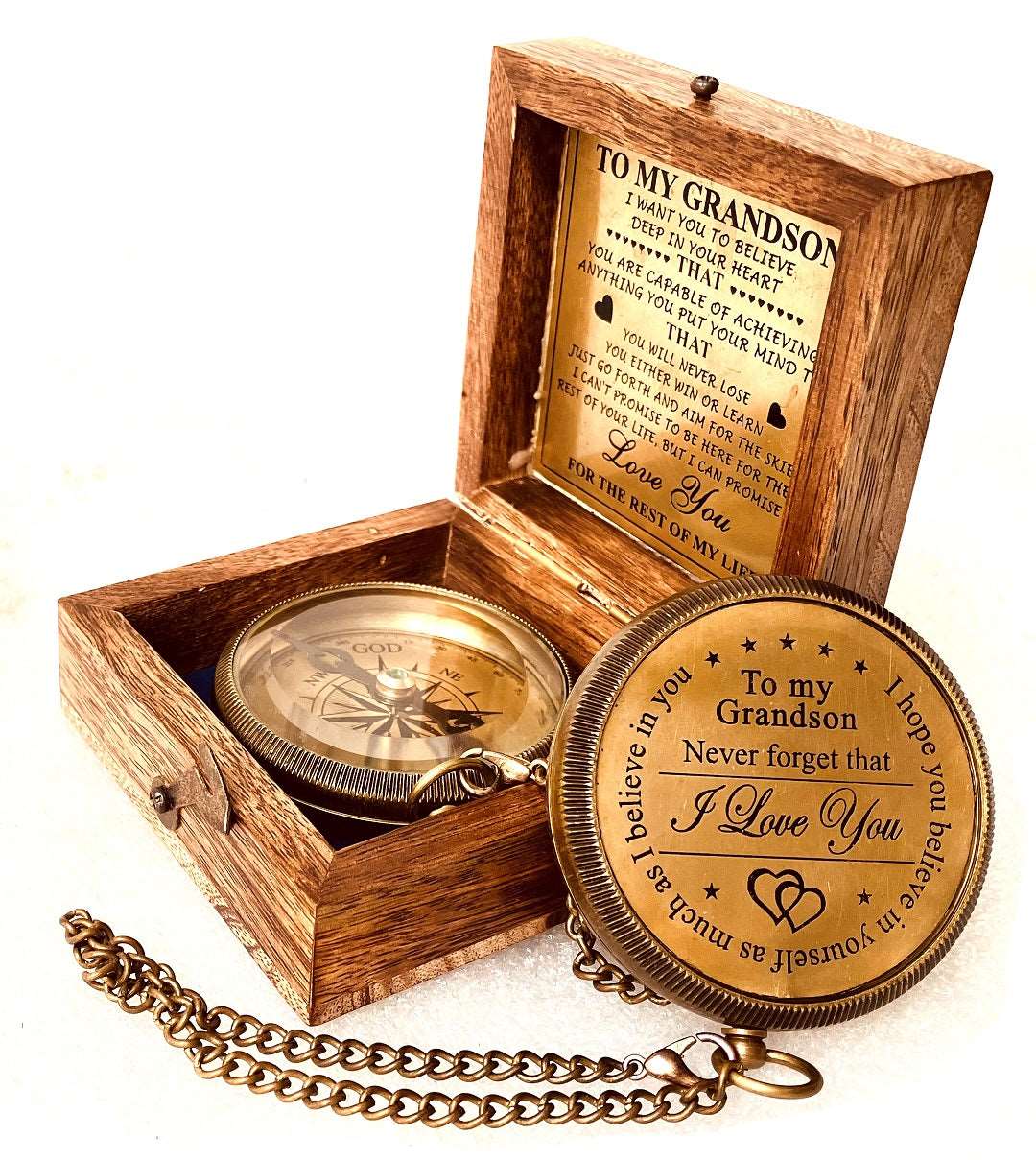
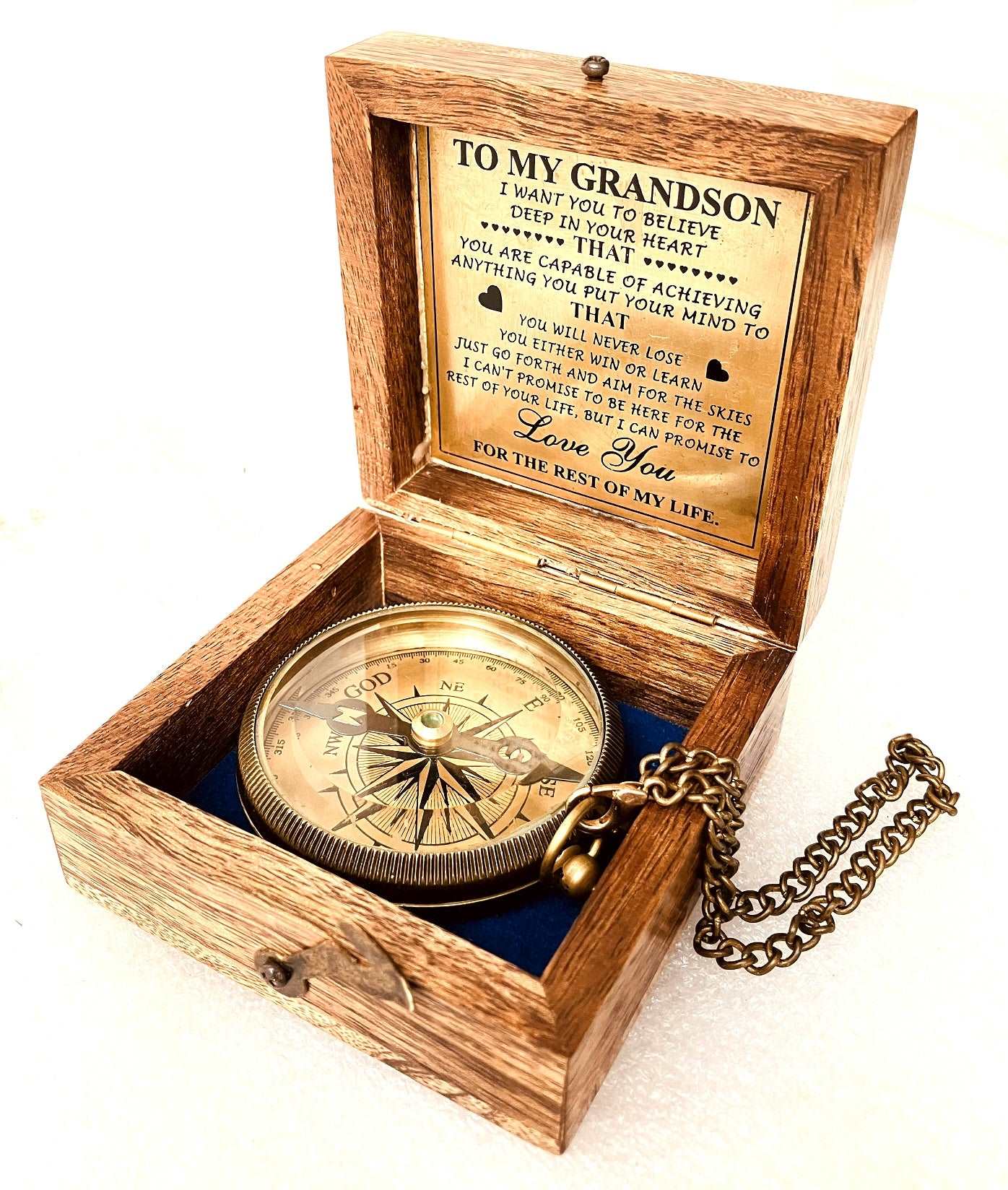
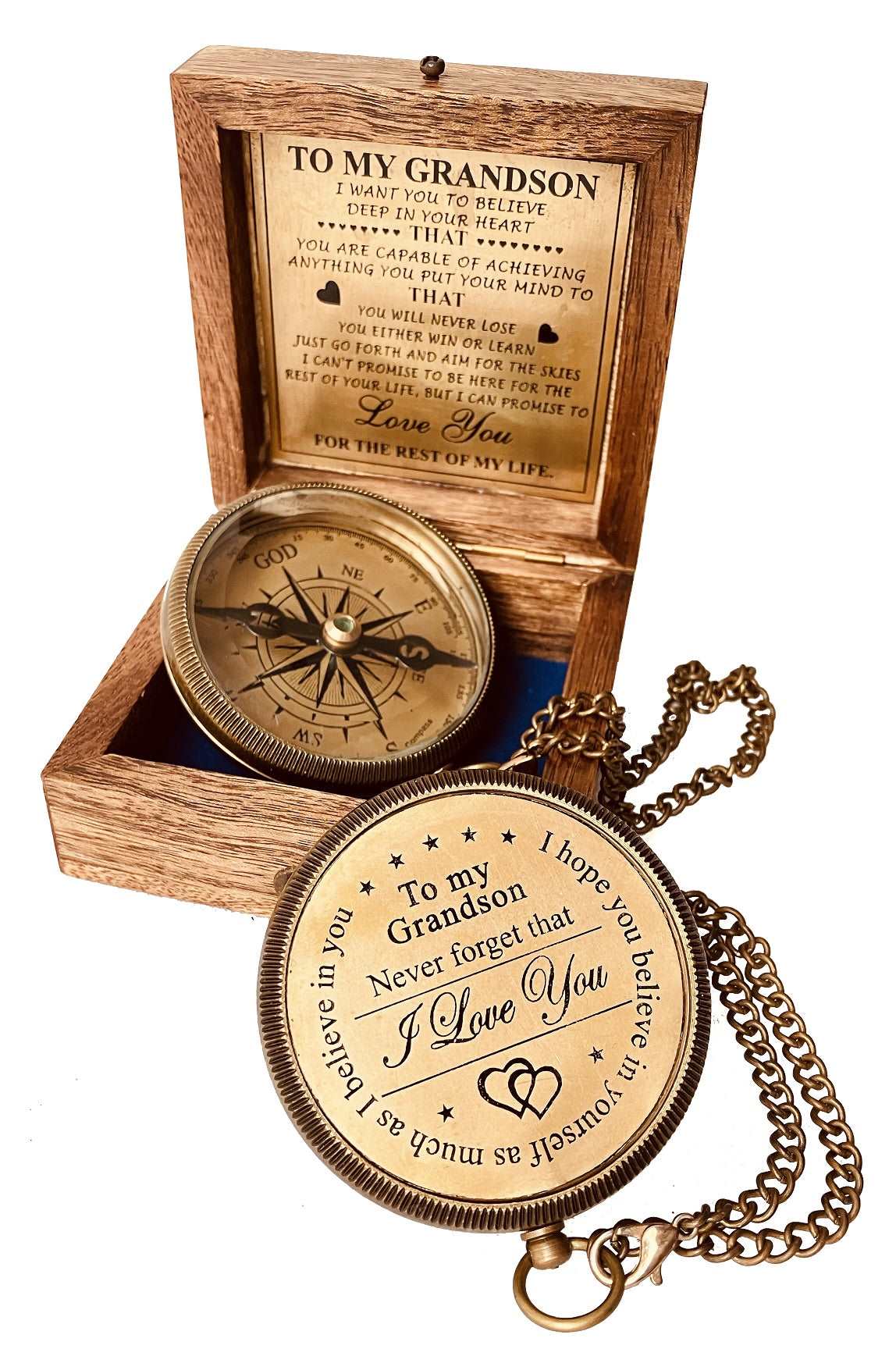
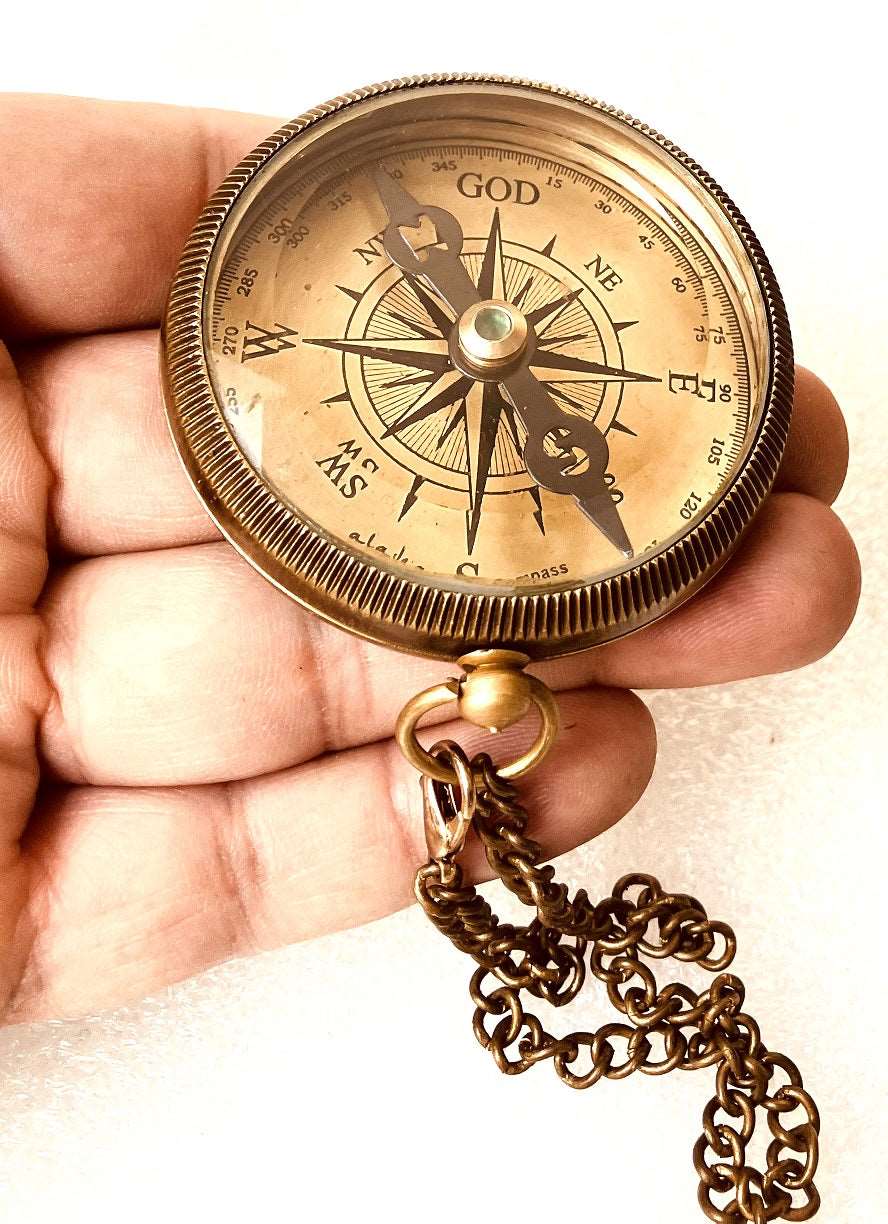
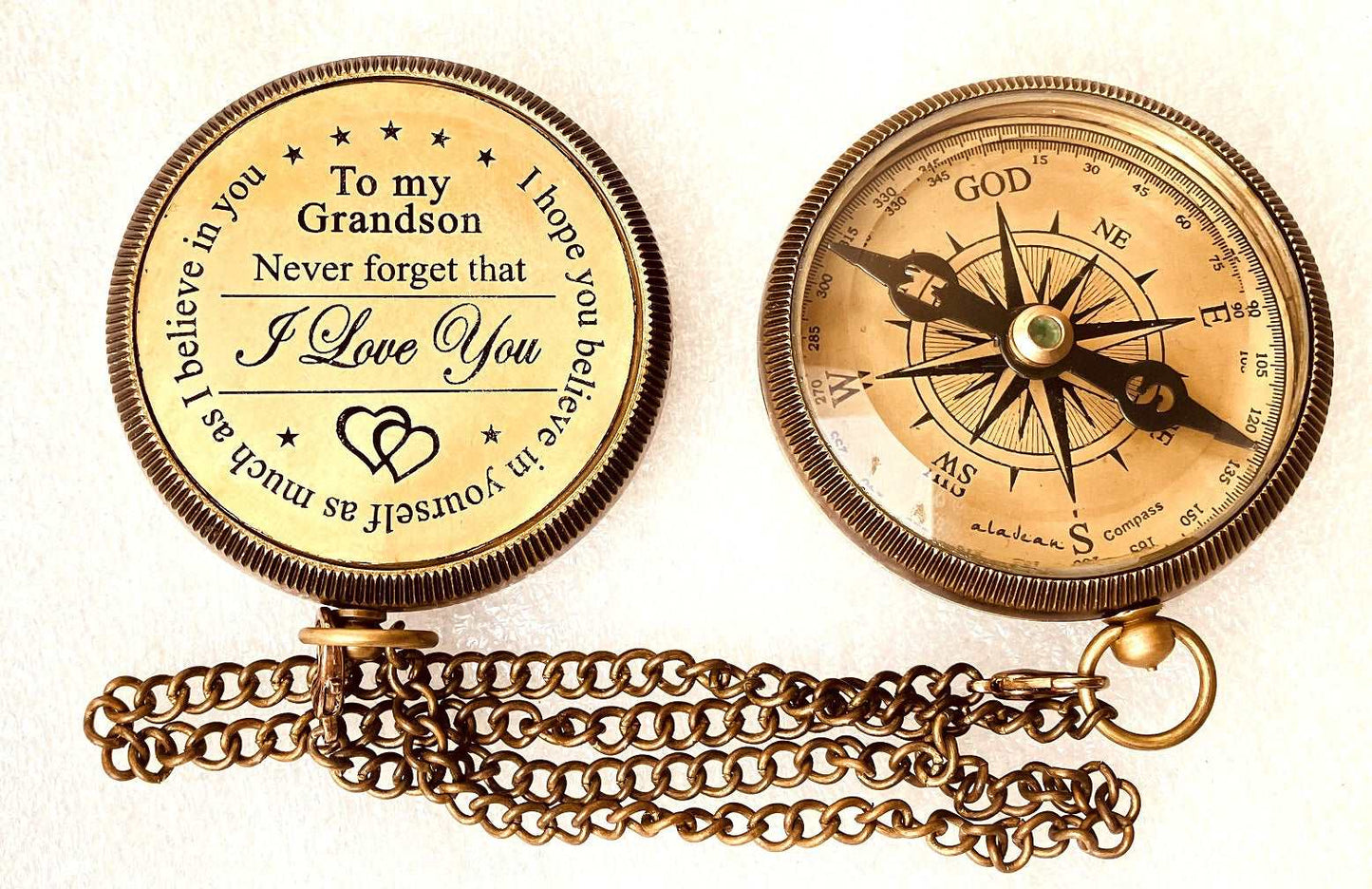
From the 15th through 17th centuries, the pocket sundial compass was the prestige gift of the intellectual elite. Exchanged between scholars, navigators, and noblemen, it represented mastery over time and space — the two great frontiers of the Renaissance mind. To give a finely crafted brass compass was to make a statement about the recipient: You are a person who knows where you are going. You are not lost. You navigate by reason.
As mechanical clocks and modern navigation made the sundial compass practically obsolete, the gift fell from fashion. But its symbolic power — direction, purpose, finding one's way through an uncertain world — is if anything more resonant in 2026 than it was in 1580.
Discover our engraved brass compasses — the Renaissance gift, made permanent →
The Elizabethan Glove — Intimacy You Could Hold
In Elizabethan England, giving someone your glove was one of the most charged romantic acts possible. A glove had touched your skin. It carried the shape of your hand. To give it to another person was to give them something irreplaceably personal — intimate in a way that a culture of thick clothing and strict propriety made almost electric. Knights wore their lady's glove in their helmet at tournament. Lovers exchanged them as tokens of devotion. Shakespeare's plays are full of glove scenes, each one humming with tension.
As cultural attitudes to intimacy and clothing shifted, the charged meaning of the glove dissolved. The emotion — the need to give something that carries your physical presence, your warmth, your specific self — found new expression in handwritten letters, then photographs, then engraved objects carrying your words in permanent form.
Wives and Daughters — Gifting People You Loved
Perhaps the most complex entry in this history: for most of recorded human civilization, women were among the most common diplomatic gifts. Daughters were given in marriage to seal alliances between kingdoms. This was not always experienced as purely transactional — many of these women were loved by their families, celebrated in ceremony, sent with lavish dowries as expressions of that love. And yet the fundamental structure was a human being, given.
The practice appears in nearly every major civilization — Mesopotamia, Egypt, China, India, Greece, Rome, medieval Europe, feudal Japan. It was so normalized that entire legal and religious frameworks were built around it. It faded not because the desire to forge alliances disappeared, but because the moral framework shifted — slowly, unevenly, incompletely — toward recognizing that people are not things to be given.
What replaced it? Often, engraved objects. A sword passed between families. A piece of jewelry carrying a family crest. A compass. Objects that carried the weight of the bond without requiring a person to carry it.
The Shift That Changed Everything — When Gifting Became an Industry

The Victorian Revolution (1837–1901)
Before the Industrial Revolution, making a gift took time. Usually your own time. A gift was something you made, grew, preserved, or commissioned from a craftsperson who knew both you and the person you were giving it to. By definition, it was irreplaceable. You could not walk into a shop and buy the same one for someone else.
The Industrial Revolution ended that. Mass production meant objects could be made identically, cheaply, in enormous quantities. The emerging middle class — newly prosperous, newly uncertain about where they stood socially — seized on gift-giving as a primary vehicle for displaying that they had arrived. Christmas, a relatively modest religious occasion for most of history, was reinvented in the Victorian era as a major gift-giving festival, helped considerably by Charles Dickens's A Christmas Carol in 1843 and the invention of the commercial Christmas card the same year.
The question of what to give shifted. It had been: What will speak to who this person is? It became: What is an appropriate amount to spend? Those are very different questions. One is about the person. The other is about appearances.
The 20th Century: Occasions Invented, Meaning Diluted
The commercialization the Victorians started, the 20th century industrialized completely. Mother's Day was formalized in 1914. Father's Day followed. Valentine's Day was transformed from a modest lovers' tradition into a multi-billion-dollar industry within a few decades. The greeting card companies, chocolate manufacturers, and florists did not merely respond to human emotion — they actively constructed the vocabulary of that emotion and then sold it back at retail.
By the late 20th century, a phenomenon researchers began calling gift anxiety had become widespread — the stress, performance pressure, and obligation associated with giving. A 1993 paper by economist Joel Waldfogel in the American Economic Review argued, provocatively, that gift-giving destroys economic value, because givers almost never know recipients' preferences as well as recipients know their own. His paper sparked years of debate. But the real diagnosis it pointed to was simpler: gifting had, in many cases, lost its purpose. The most ancient human ritual had been hollowed out by commerce and turned into a performance of obligation.

The Psychology of Modern Gifting — What Is Actually Happening When We Give
And yet. Despite all of this — despite gift anxiety, despite Amazon wish lists and gift cards and the entire apparatus of commercialized giving — people still lose sleep over what to give. Still feel that specific, unmistakable joy when they find the right thing. Still stand in shops or sit at their laptops at midnight, genuinely trying.
Why? What is actually going on?
The Neuroscience: Your Brain on Giving
A 2006 study published in the Proceedings of the National Academy of Sciences by Jorge Moll and colleagues at the National Institutes of Health found something that should probably be taught in schools: choosing to give to another person activates the mesolimbic reward pathway — the same neural circuitry triggered by food, sex, and deep social connection. Giving is not a sacrifice your brain tolerates. It is something your brain rewards.
And a 2008 study by Elizabeth Dunn, Lara Aknin, and Michael Norton, published in Science, went further. They found that spending money on others produces measurably greater happiness than spending money on yourself — and this held true across wildly different income levels and cultures, from university students in Canada to villagers in Uganda. The size of the gift was almost irrelevant. The act of giving was what moved the needle.
This is not sentimentality. It is biology. We did not evolve to be generous despite it being costly. We evolved to find generosity rewarding, because groups that gifted survived better than groups that didn't. The joy of giving is not a feeling we learned. It is a feeling we were built for.
Why a Girlfriend Gives Her Boyfriend a Gift

A 2011 study in the Journal of Consumer Research by Francesca Gino and Francis Flynn found something gift-givers consistently get wrong: they underestimate how much recipients value symbolic or experiential gifts, and overestimate how much practical ones land.
When a woman gives her partner a gift, she is almost never thinking about the object. She is thinking about a moment she wants to preserve — somewhere they went, something he said, something she noticed about him that he has never quite seen in himself. The gift is a mirror held up to say: This is what I see when I look at you. This is what I want you to know about yourself.
Research consistently shows that women tend toward gifts that require knowing the recipient — gifts that are evidence of attention and care. Men tend toward gifts that signal investment — time, money, effort. Both are, underneath, saying the same thing: You are worth this. I thought about you. I chose you.
Why a Grandfather Gives His Grandson a Gift

This one runs deeper than most people realize. A 2017 study in Evolution and Human Behavior found that grandparental investment — including gift-giving — is one of the strongest predictors of grandchild wellbeing, even when controlling for socioeconomic factors. But the psychology behind it goes beyond wellbeing statistics.
When a grandfather gives his grandson a gift — a real one, chosen with care — he is doing something that operates on a timescale most of us rarely think about consciously. He is reaching across his own mortality. He is placing something of himself into a future he may not live to witness. The gift is a form of continuity. A way of saying: When I am gone, I want you to have something that remembers what I valued. Something that knows who I was. Something that carries me forward with you.
This is why gifts between grandparents and grandchildren so often involve objects of navigation, of wisdom, of strength. They are not gifts for a Tuesday afternoon in August. They are gifts for a conversation the grandson will have with himself thirty years from now, when he holds that object and suddenly understands what it meant.
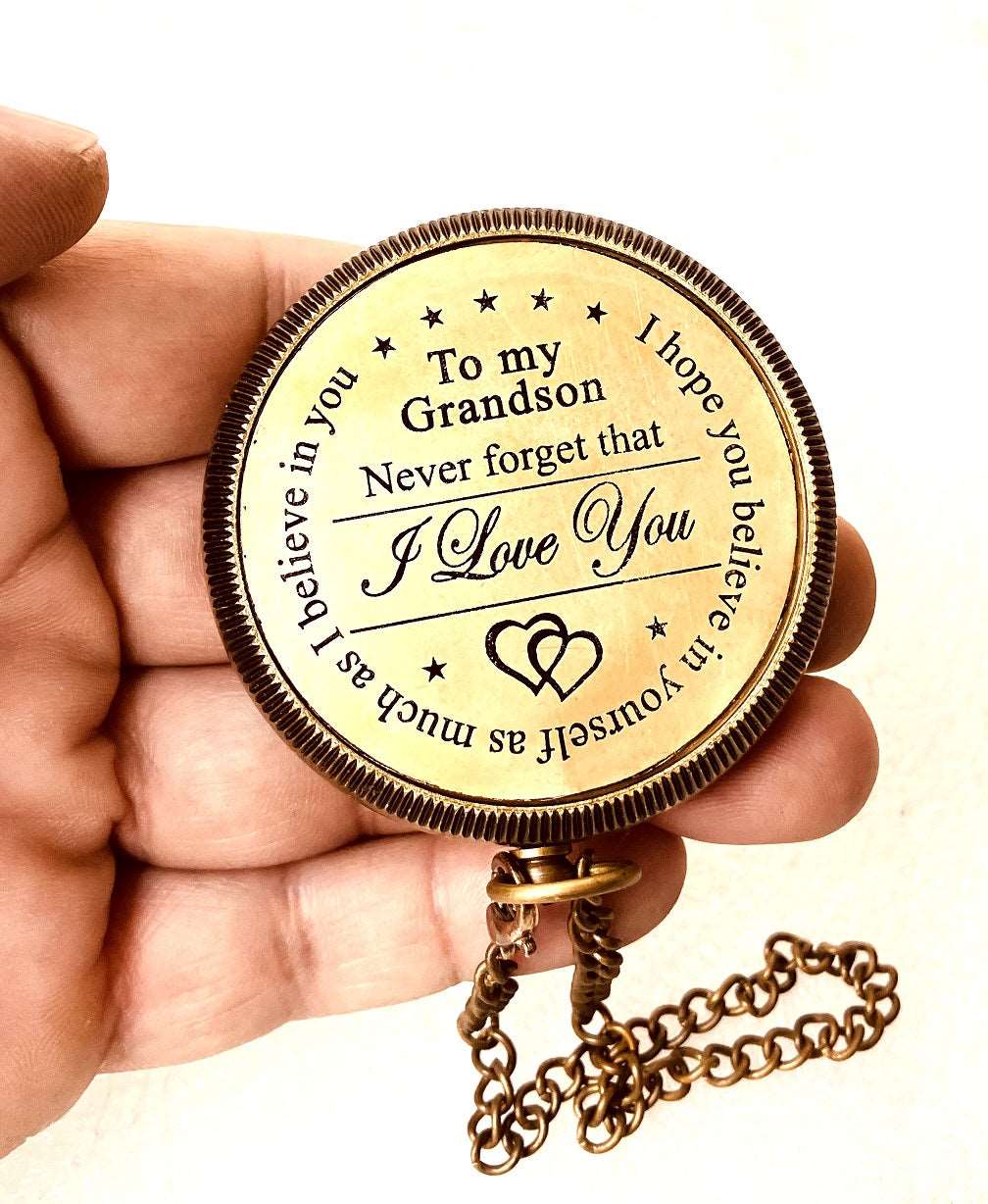
Our engraved brass compass for grandsons is one of our most deeply personal pieces — carrying a grandparent's words in over 40 languages, built to last generations. Browse the full compass collection →
Why Anyone Gives to Anyone
A 2020 meta-analysis of gift-giving research in the Journal of the Association for Consumer Research identified the primary motivations for gifting, in order of how frequently they appear:
- To strengthen a relationship — to affirm connection and closeness
- To express feelings that are hard to verbalize — love, gratitude, pride, apology, admiration
- To mark a transition or milestone — to acknowledge that something important just happened
- To extend a part of oneself — to give something that reflects the giver's values or identity
- To create a lasting memory — to build a physical anchor for an emotional moment
Read that list again. Notice what is not on it. Nobody gives a gift because they want the recipient to have a thing. They give because they want the recipient to feel something — and they want that feeling to have a physical home it can return to, long after the moment has passed.
What 1.5 Million Gifts Taught Us

We have been doing this for a long time. Over 1.5 million personalized gifts, engraved in more than 40 languages, sent to over 100 countries. Arabic and Welsh and Swahili and Tamil and Japanese and 35 others. We have engraved gifts for 18th birthdays and 80th anniversaries, for soldiers leaving on deployment and athletes standing on a podium, for fathers who ran out of words and daughters who had far too many.
Here is what we have learned — not from research papers, but from 1.5 million real conversations with real people trying to say something real:
Nobody contacts us because they want a brass compass. They contact us because someone they love is about to leave for university, or has just come back from something difficult, or is turning an age that makes the years suddenly feel countable — and they have something enormous inside them that will not come out in speech. They need a vessel. They need the engraving to carry what their voice cannot.
The gifts that get kept longest are the ones that say "I know you." Not just "I love you" — though that matters. Specifically: I know what you believe. I know what you have been through. I know where you are headed. And I believe in it. That level of specificity — that evidence of real, sustained attention — is what turns an object into an heirloom. The difference between a gift that sits in a drawer and one that gets passed to the next generation is almost always the depth of the knowing behind it.
The only regret people consistently express is waiting. The message we receive more than almost any other is a variation of: "I wish I had given this to him before he passed." The gift existed in that person's mind, sometimes for years. They were waiting for the right moment. There is no right moment. There is only now, and later, and the possibility that later never comes.
Where Gifting Is Going — and Why This Moment Matters
Something is shifting. After decades of commoditization, after the hollowing out of gifting into obligation and performance, people are quietly returning to the original impulse. The data is unambiguous:
- A 2023 National Retail Federation survey found that 63% of consumers would rather receive a meaningful, personalized gift than an expensive one
- Google Trends data shows searches for "personalized gifts" have grown over 400% in the past decade
- The global personalized gifts market, at $28.6 billion in 2022, is projected to reach $54.5 billion by 2030 (Grand View Research)
People are remembering. Not consciously, perhaps, but in their behavior — in what they search for, what they choose to give, what they want to receive. They are returning to the same impulse that drove a prehistoric person to carry a shell across 200 miles of African savanna: the need to say something true, in a form that does not disappear.
The gifts that will be remembered in 2056 share the same qualities as the gifts that were remembered in ancient Rome and Silk Road Persia and medieval Scandinavia. They are made with intention, not convenience. They carry language — words that do the work speech cannot. They are built to outlast the moment that inspired them. And they make the person who receives them feel not just liked, but genuinely, specifically known.
That is what an heirloom is. Not a category of object. A quality of attention.
Browse our collections: Brass Compasses · Viking Drinking Horns · Chalices & Goblets · Brass Sundials
The Thread That Never Broke

The pharaohs are gone. The Roman legions are dust. The Viking longships have long since rotted into the seabed. The Elizabethan gloves have crumbled to nothing. Even the names of most of the people who gave and received the most extraordinary gifts in history have been lost.
But the impulse that moved them all — the need to give something real to someone real, to say I see you, I love you, I will not forget you, I want you to carry something of me forward — that impulse is in you right now. You felt it somewhere in reading this. You thought of someone. You know exactly who.
Don't wait for the right moment. Give the gift that has been sitting in you.
The right words, engraved in brass, will still be speaking long after both of you are gone. That is not a product. That is a legacy.
— The Aladean Team, engravers of 1.5 million stories and counting.
About Aladean: We are a heritage gift company specializing in handcrafted, personalized brass gifts — compasses, chalices, Viking drinking horns, medieval armor, and sundials — engraved in over 40 languages and shipped to more than 100 countries. Every piece is designed not just to be given, but to be kept. To be inherited. To outlast us all.